


Introduction
Getting dressed should feel simple, not stressful. However, many people open their closet every morning and still feel like they have nothing to wear. The real problem is usually not the number of clothes but how they are combined. That is where mix & match outfits become powerful. By learning how to combine your clothes in flexible ways, you can create many looks without buying new items.
This approach helps you build confidence in your style. It also reminds us that style is a daily skill that anyone can learn with patience, small experiments, and a little curiosity. You start seeing your wardrobe as a group of pieces that work together rather than single items that only match one look. This guide will walk you through what mix and match really means, why it matters, and how you can master it step by step.
What Are Mix & Match Outfits?
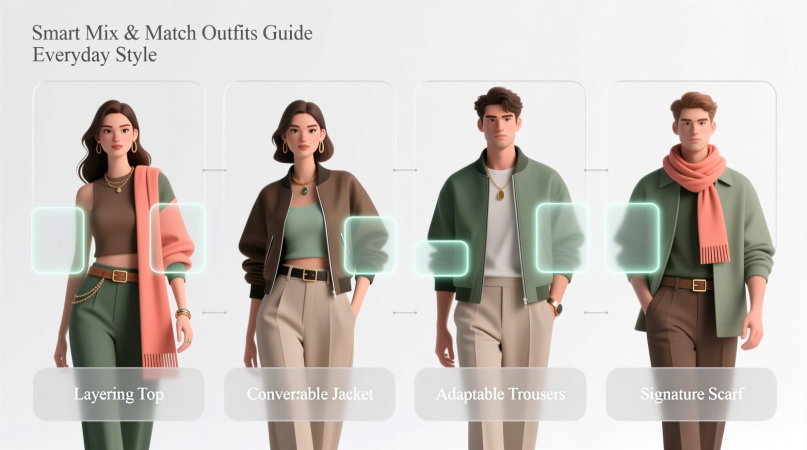
Mix & match outfits are outfits created by combining different clothing pieces in multiple ways instead of wearing the same fixed combinations repeatedly. The goal is not to buy more clothes but to use what you already own in smarter, more creative ways.
For example, one basic white shirt can work with jeans for a casual day, with trousers for school or meetings, and with a skirt for a more polished look. The same happens with jackets, shoes, and accessories. Each piece becomes more useful because it can be styled differently.
This method focuses on:
- Versatile clothing items
- Neutral and easy-to-combine colors
- Layering pieces
- Simple patterns that blend well
In short, mix & match outfits allow you to build many looks from a small wardrobe, making dressing easier, faster, and more enjoyable.
Why Are Mix & Match Outfits Important?
Mix & match outfits are important because they make your wardrobe more practical and cost-effective. Instead of chasing every new trend, you learn how to use your existing clothes creatively. This reduces shopping pressure and helps you develop your personal style.
They are also useful because:
- They save time when choosing outfits daily
- They help you pack lighter while traveling
- They reduce clutter in your closet
- They encourage mindful shopping habits
Furthermore, this method supports sustainable fashion. When you reuse items in different ways, you avoid unnecessary purchases and reduce waste. Most importantly, mix & match outfits increase confidence because you always have something stylish and comfortable to wear without feeling stuck or confused in front of your wardrobe.
May be you like it:
Trendy Hats & Caps: The Ultimate Beginner and Intermediate Guide
Belts & Scarves: A Complete Style Guide for Beginners
The Complete Beginner-Friendly Guide to Shoes & Footwear
Step-by-Step Guide to Creating Mix & Match Outfits
Step 1: Start With Basic Wardrobe Essentials
Begin by identifying simple, versatile items. These usually include:
- Plain T-shirts
- Neutral sweaters
- Classic jeans
- Black or beige trousers
- Simple skirts
- Neutral jackets
These pieces act as the base of many looks. Avoid overly complicated prints at the beginning because they are harder to combine. Once you master basics, you can slowly add bolder items.
Step 2: Choose Neutral Colors First
Neutral colors like black, white, gray, navy, and beige combine easily with almost anything. When most of your wardrobe is neutral, every piece has more pairing options. You can then add one or two bright colors to create interest without making outfits look too busy.
Step 3: Add Layers Smartly
Layering is key in mix & match outfits. You can repeat the same inner clothing but change the outer layer and instantly create a new look. Try combinations such as:
- T-shirt + open shirt
- Shirt + sweater
- Dress + denim jacket
Layers add depth, comfort, and flexibility for different weather conditions.
Step 4: Use Accessories to Transform Looks
Accessories can completely change the mood of an outfit without replacing main clothing pieces. Scarves, belts, watches, light jewelry, or hats add personality and variety. A very simple outfit can look new just by switching accessories.
Step 5: Balance Colors and Patterns
When using prints or bright shades, balance them with plain items. If your top has a bold pattern, keep the bottom simple. This balance makes outfits visually pleasing and easier to combine.
Step 6: Build Capsule Outfit Formulas
Create simple formulas such as:
- Basic top + jeans + sneakers
- Shirt + trousers + loafers
- Dress + jacket + flats
These formulas make getting dressed automatic and help you experiment confidently without overthinking.
Step 7: Try Seasonal Mix & Match
Different seasons require different layers. However, many pieces can work year-round if styled differently. For instance:
- A summer dress can work in winter with tights and a cardigan
- A T-shirt becomes autumn-ready with a jacket
- Light shirts can be layered under sweaters during colder months
This seasonal flexibility is a huge advantage of mix & match outfits.
Step 8: Plan Outfits in Advance
Planning reduces stress. You can choose outfits for the week or take photos of combinations you like. When you are in a hurry, you already know what works and feel more relaxed and prepared.
Step 9: Focus on Fit and Comfort
No matter how stylish an outfit is, if it is uncomfortable, you will not enjoy wearing it. Make sure clothes fit well, allow movement, and match your daily routine. Comfort increases confidence, and confident outfits always look better.
Step 10: Review and Refresh Regularly
Every few months, review your closet. Remove clothes you never wear, repair those you like, and notice what items you use most. This reflection makes your mixing and matching even easier over time.
Benefits of Mix & Match Outfits
- Saves money by reducing unnecessary shopping
- Makes your wardrobe lighter and more organized
- Encourages creativity and personal expression
- Helps you get dressed faster every day
- Reduces decision fatigue
- Ideal for travel and small closets
- Supports sustainable fashion habits
Disadvantages / Risks
- Repeating items may feel boring without creativity
- Requires planning and practice at first
- Bold prints can be harder to combine
- Poorly fitted clothes limit outfit options
- Overbuying trendy pieces can break combinations
Common Mistakes to Avoid
Avoid buying clothes that match only one outfit. Another common mistake is ignoring color harmony, which makes combining items difficult. Do not keep uncomfortable clothes hoping you will wear them someday, as they only take space. Many people also forget to tailor clothes for better fit, which reduces mixing potential. Finally, avoid copying every trend. Instead, learn what suits your lifestyle and body comfort.
May be you like it:
Bags & Purses: A Complete Beginner’s Guide
Fashion Accessories: The Complete Beginner-Friendly Guide
Statement Jewelry: A Complete Beginner and Intermediate Guide to Bold Accessories
FAQs
1. Can I mix patterns and still look coordinated?
Yes, you can. Start with small prints and pair them with larger ones in similar color families. Keep at least one neutral piece in the outfit to avoid visual clutter.
2. How many clothes do I need for mix and match dressing?
There is no fixed number. However, 15–25 versatile pieces are usually enough to create many outfits. Focus on quality basics instead of quantity.
3. Do mix & match outfits work for school or college?
Absolutely. They are perfect because they save time, reduce confusion in the morning, and allow you to repeat clothes without looking repetitive.
4. Can bright colors be used in mix and match looks?
Yes, but use them wisely. Combine one bright color with neutrals. This way, the outfit stays balanced and easy to pair.
5. What fabrics are best for flexible mixing?
Choose comfortable, breathable fabrics such as cotton, denim, or light knits. These fabrics layer well and work across different seasons.
6. How do I start if my wardrobe is full of random items?
Begin by sorting clothes into categories: keep, donate, repair. Keep simple, comfortable, and neutral items first. Then slowly build combinations from them.
Expert Tips & Bonus Points
- Invest in good basics before buying trend pieces
- Keep clothes clean, ironed, and ready to wear
- Take photos of outfits that worked well
- Try new combinations monthly
- Choose shoes that match multiple outfits
- Keep accessories simple but meaningful
- Learn which colors suit your skin tone
- Trust comfort and confidence over trends
To make these ideas part of your daily life, try a simple thirty day practice plan. Week one is about observation: notice colors you repeat, items you never wear, and outfits that feel comfortable for long hours. Week two is about small trials: change only one element each day, such as shoes, a light layer, or an accessory, and write a short note about what worked. Week three focuses on creativity: build outfits inspired by a season, a place, or a song title to loosen strict rules and build confidence. Week four is about reflection and editing: decide which combinations you truly enjoyed and which ones felt forced, then adjust your closet list. At the end of the month, take photos of ten favorite outfits and keep them in a folder on your phone. On busy mornings this mini lookbook will save time, reduce stress, and remind you that personal style grows through practice, not perfection.
Conclusion
Learning to create mix & match outfits is not about owning a giant wardrobe. Instead, it is about understanding how to use what you already have in smarter ways. When you build a small collection of versatile basics, every new combination becomes easier and more enjoyable.
This approach saves time, money, and mental energy. It also allows you to express your personality with simple adjustments like color choice, layering, and accessories. With practice, you begin to see your wardrobe as a flexible system instead of separate, disconnected pieces.
As you apply the steps in this guide, you will notice your confidence growing. Dressing each day will feel less stressful and more creative. Most importantly, you will realize that style is not about constant shopping, but about mixing, matching, and appreciating the clothes you already own.
The phrase mix & match outfits has appeared in this guide several times because it represents the core idea: freedom, creativity, and smart wardrobe management. With patience and curiosity, anyone can master this method and enjoy a more organized, expressive, and practical way of dressing every single day. As you continue practicing, you may notice that friends begin asking for your advice or inspiration. This is not because you bought more, but because you learned to plan clearly, care for your clothes, and enjoy the process of getting dressed. Keep experimenting, stay comfortable, and let your style grow naturally with your life.
May be you like it:
How to Accessorize: A Complete Beginner-Friendly Guide
Personal Style Guide: Build a Look That Truly Feels Like You
Wardrobe Essentials: A Complete Beginner-Friendly Guide to Building a Smart Closet
